

Choosing living room lighting can feel like a small decision with a surprisingly big impact. The right fixture affects how spacious your room feels, where your eye travels, how comfortable the evening atmosphere is, and whether the space feels warm and inviting or a little too much like a showroom.
So, wooden pendant lights or downlights? The honest answer is that they do different jobs. For most living rooms, the best result comes from combining them with lamps and dimmers to create layers of light.
But if you’re choosing one main feature, a beautifully designed David Trubridge light can bring something downlights often can’t: warmth, texture, personality and a gentle sense of occasion.
The quick answer: pendant for atmosphere, downlights for coverage
Downlights are practical. They sit neatly within the ceiling and spread light across the room, making them useful for general visibility, cleaning, entertaining and everyday tasks.
A David Trubridge light, on the other hand, gives the room a visual centre. It draws light closer to a coffee table or seating area and creates a softer, more considered mood.
Here’s the simple comparison:
| David Trubridge lights | Downlights | |
|---|---|---|
| Best for | Warmth, character and a defined zone | General room coverage |
| Visual effect | Sculptural, decorative and atmospheric | Minimal and unobtrusive |
| Light quality | More directional, with patterned shadows | More even and widespread |
| Ideal placement | Above a coffee table, dining area or reading zone | Across the ceiling or around the room’s perimeter |
| Best used with | Floor lamps, table lamps and dimmers | Pendants, lamps or wall lighting |
Psst, a room lit only by downlights can feel a little flat, while a room lit only by one pendant may have gloomy corners. Layering is where the magic happens!
What makes David Trubridge lights feel warmer?
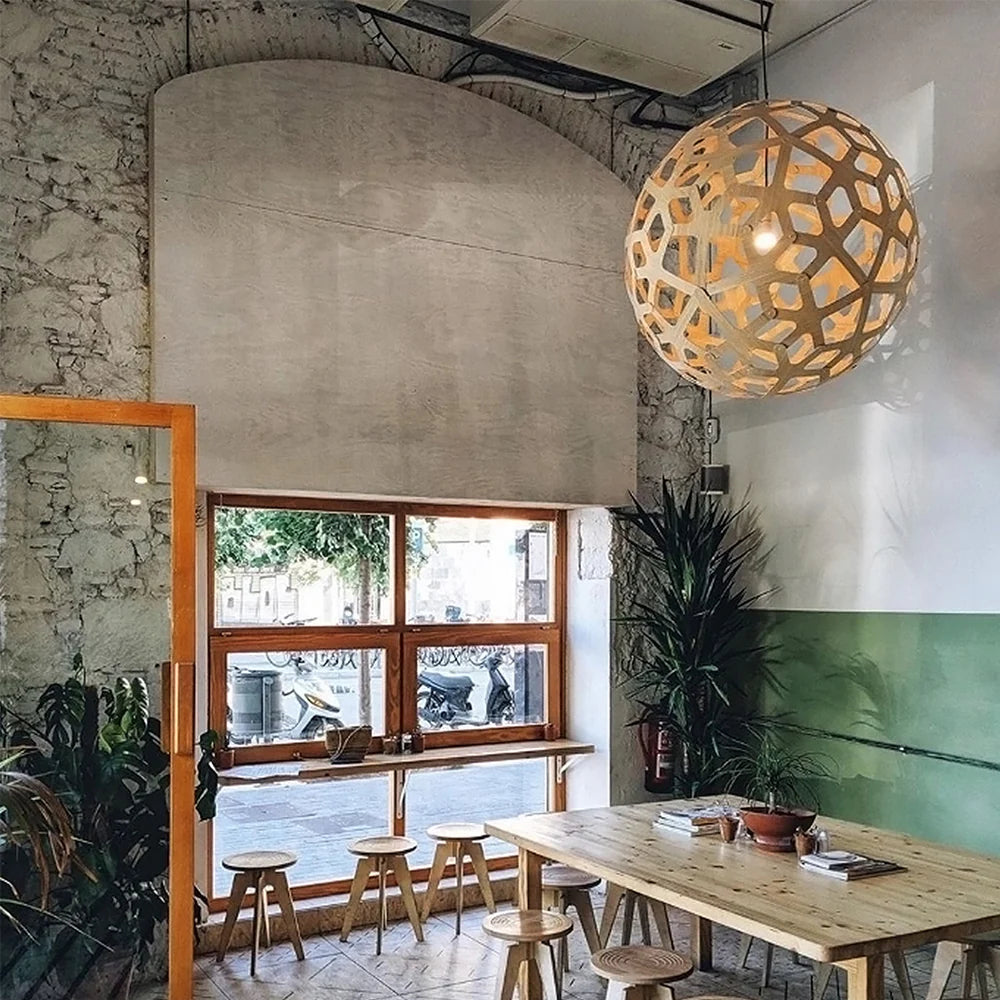
Bamboo naturally softens a room. Even when the rest of your living space includes glass, concrete, steel or darker colours, a bamboo pendant introduces a tactile, organic element.
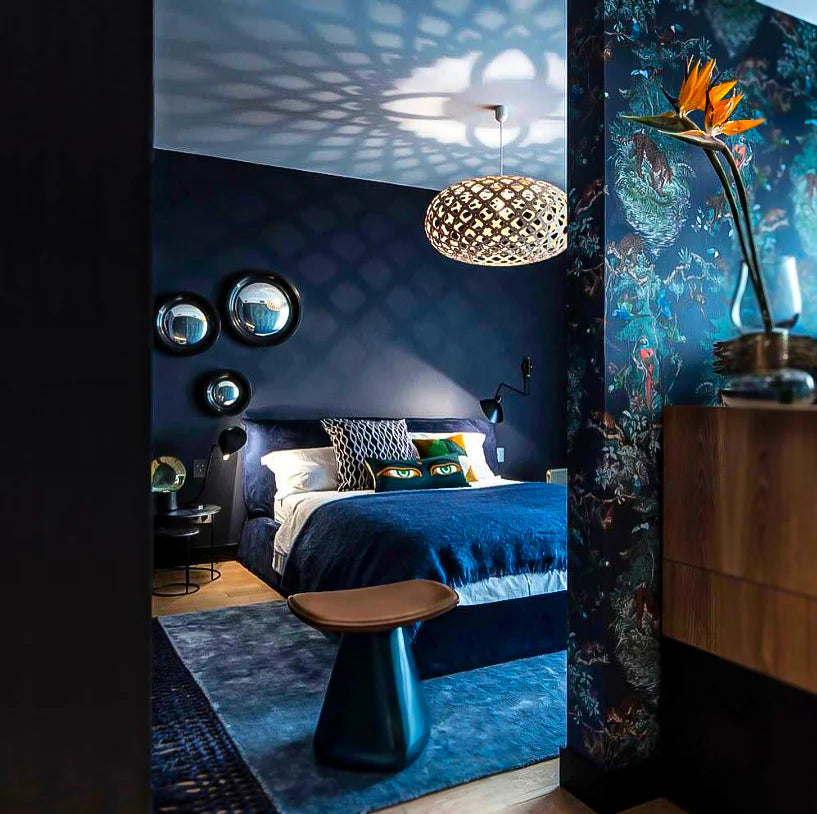
The open structure of David Trubridge lighting is especially effective because the light filters through the shade rather than simply shining down. This creates gentle patterns across the ceiling and nearby walls.
The effect changes throughout the day:
- In daylight, the pendant works as a sculptural design feature.
- At dusk, it becomes a softly glowing focal point.
- In the evening, its shadows add depth and movement to the room.
That patterned light is part of the appeal. It can make a quiet night on the sofa feel just a little more special, even if you’re only watching television and wondering what to have for supper.
These are the sculptural wooden pendant lights you see in design magazines and cafés — handmade from bamboo, a renewable timber, and the kind of piece people search for when they want lighting that feels both practical and expressive.
How downlights change the room
Downlights are designed to flood a space with light from above. When positioned thoughtfully, they help reduce dark patches and make a larger living room feel bright and easy to use.
They’re particularly helpful when:
- Your living room is large or open plan
- The ceiling is low
- You need flexible general lighting
- The room includes walkways without a clear central table
- You want good visibility for cleaning, reading or entertaining
The downside? A grid of downlights can make the ceiling the most noticeable feature in the room. Too many can also create glare, harsh shadows beneath your eyes and a less relaxed evening atmosphere.
This doesn’t mean downlights are a bad choice. It simply means they work best when they’re not expected to do everything.
Use them as your practical base layer, then switch to your pendant, table lamp or floor lamp when you want the room to feel calmer.
Ceiling height and room size matter
Before choosing a pendant, look at how your room is used rather than only measuring its floor area.
Standard-height ceilings
With a typical ceiling of around 2.4 metres, a large pendant may feel low if it hangs in the middle of an open walkway. In this situation, position it over a coffee table or another defined zone where people won’t be walking underneath it.
A smaller David Trubridge Coral 600 can work beautifully above a central coffee table, especially when the seating is arranged around it. The pendant feels intentional rather than in the way.
As a general guide, keep the lowest point of a pendant comfortably above head height in any walking area. If you can walk beneath it without ducking, you’re off to a good start!
Higher ceilings
High ceilings are wonderful for statement lighting. A pendant can hang lower and bring the light closer to the people and furniture below, making the room feel more balanced and connected.
Larger formats of the Floral pendant or Kina pendant can fill the vertical space without making the room feel crowded.
Smaller living rooms
In a compact room, scale matters more than you might expect. A delicate pendant can disappear, while an oversized pendant may dominate the seating area.
Look for a shade that feels substantial enough to be seen from across the room, but still leaves breathing space around windows, artwork and furniture. Pair it with a floor lamp rather than adding extra downlights everywhere.
Where should you place a bamboo pendant?
For most living rooms, the best position is over a defined feature rather than directly in the centre of the ceiling.
Consider:
- Above a round or oval coffee table
- Over a small reading or conversation area
- Between a sofa and armchair
- Above a dining table in an open-plan living space
- Near a window seat or relaxed reading corner
If the pendant hangs above a table, the bottom of the shade is often positioned approximately 75–90 centimetres above the tabletop. This gives you useful light while keeping sightlines comfortable across the table.
A pendant over a coffee table also gives the shadows somewhere lovely to land. The tabletop, rug and surrounding furniture catch the patterned glow, rather than the light shining directly into people’s eyes.
Which David Trubridge design suits your room?
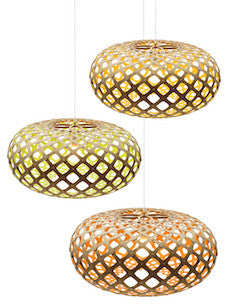
The three designs we stock each create a slightly different feeling. Coral is the classic — a lively open pattern inspired by natural forms, and a lovely central feature over a coffee table. Kina has a softer, rounded woven form inspired by the sea urchin shell, and works especially well above a dining table. Floral is the most decorative, with a flower-like shape that brings gentle movement and a touch of nature-inspired detail.
All three are handmade from bamboo and finished in New Zealand. If you're weighing up which one is right for your space, you're always welcome to ask us — we're happy to help you choose.
Don’t forget the bulb
The bulb affects the mood just as much as the shade.
For a living room, warm white light around 2700–3000K is usually a comfortable place to start. It helps bring out the natural warmth of bamboo while keeping the room cosy rather than stark.
A few practical tips:
- Choose a dimmable bulb where possible.
- Use warm white for evening relaxation.
- Avoid cool blue-white light if you want a calm, welcoming room.
- Match your pendant and downlights closely so the room doesn’t have competing shades of white.
- Remember that the David Trubridge pendants listed above require an E27 bulb, which is not supplied.
As always, check the product specifications and have the light installed by a qualified electrician. These are beautiful design pieces, but they still need to be installed safely and correctly.
The best living room lighting is layered
If you’re renovating or planning a new lighting layout, try this simple combination:
- General layer: a small number of well-positioned, dimmable downlights.
- Feature layer: one David Trubridge light above a coffee table or dining area.
- Task layer: a floor lamp beside a reading chair or sofa.
- Atmosphere layer: a table lamp, wall light or carefully placed accent light.
During the day, you may use only the downlights or natural light. In the evening, turn down the overhead lighting and let the pendant and lamps create a softer glow.
That flexibility is the real advantage. Your living room can feel bright and functional when you need it to, then gentle and relaxed when it’s time to unwind.
So, which is better?
If you need even, practical coverage, downlights are the sensible choice.
If you want warmth, character and a feature that adds something beautiful even when switched off, wooden pendant lights like the David Trubridge designs are the more expressive choice.
For most living rooms, though, it doesn’t need to be an either-or decision. Use downlights quietly in the background, then let a David Trubridge light bring the personality.
David Trubridge designs are made in New Zealand and available to ship across New Zealand and Australia. If you’re browsing designer lighting NZ or looking for thoughtful home decor NZ, a sculptural bamboo pendant is an easy way to add a little more warmth and Aotearoa-inspired character to everyday living.
#davidtrubridge #woodenpendantlights #bamboopendantlight #designerlightingnz #homedecornz #nzdesign #livingroomlighting #interiorstyling #aotearoadesign