

A beautiful pendant can set the mood of a room before you’ve even switched on the table lamp. But when it comes to choosing a bulb, it’s easy to get lost in fittings, watts and kelvins.
Here’s the simple starting point: for a David Trubridge Coral pendant, choose an E27 LED bulb with a warm-white colour temperature. Then build a few other light sources around it so your pendant looks lovely and your room works for everyday life, too.
What bulb goes in a David Trubridge bamboo pendant?
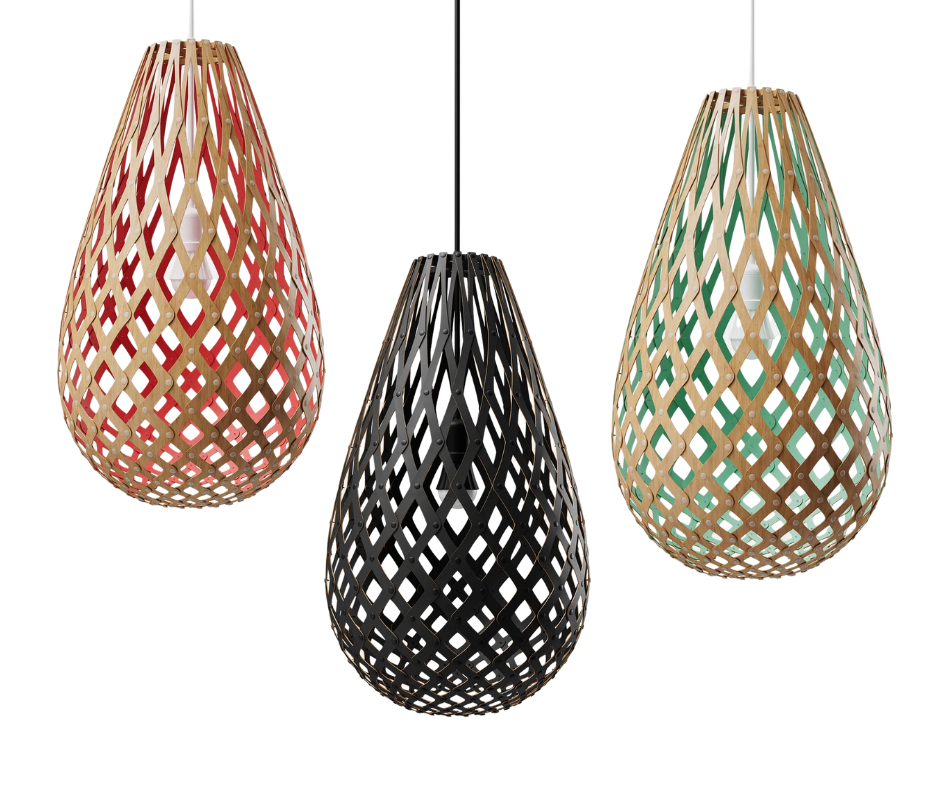
The Coral pendant takes an E27 screw-in lamp and has a maximum rating of 60W. The bulb isn’t included, so you’ll need to choose one separately. The Floral and Kina pendants sold by Design Withdrawals also list an E27 fitting and a maximum 60W lamp — and so do the bigger designs in the range, like the Koura, Hinaki and Snowflake.
For a New Zealand home, a good everyday choice is usually an E27 LED bulb designed for local mains voltage. LED bulbs use less electricity than traditional incandescent bulbs while giving you plenty of light. As a rough guide, an LED using around 6–10W may provide light comparable to a traditional 40–60W incandescent bulb, but check the package for the actual brightness in lumens, as this varies by bulb.
One small but important detail: watts measure energy use; lumens indicate brightness. If you’d like a gentle, relaxed glow, look for around 470 lumens (roughly the brightness of an old 40W bulb). For a brighter general light, around 800 lumens is a familiar 60W-incandescent equivalent.
Psst: check the fitting and bulb requirements for your exact light before buying. “Bamboo pendant” can describe many different designs, and some have integrated LED lighting rather than a replaceable bulb. The recommendations here apply to David Trubridge models with the E27 lamp holder.
Warm or cool? Choosing a colour temperature
A bulb’s colour temperature is measured in kelvins (K). The lower the number, the warmer and more golden the light tends to look; higher numbers appear cooler and whiter.
For a welcoming, cosy feel under a bamboo shade, 2700K warm white is a lovely place to start. It suits living rooms, bedrooms and dining areas, and brings out the warmth and natural texture of bamboo. If you prefer a slightly cleaner-looking white, 3000K can work well, too.
For a relaxed home, bulbs at 4000K and above can feel noticeably cooler, especially in the evening. That doesn’t make them wrong for every room, but if your goal is a soft, warm living space, try to keep your pendant and nearby lamps in a similar warm range. A collection of mismatched whites can make a room feel less settled.
What about wattage and dimming?
The Coral’s stated maximum is 60W. That’s the fitting’s maximum lamp rating, not a recommendation that you must use a 60W bulb. A lower-wattage LED can produce plenty of brightness, so check its lumen output and stay within the fitting’s stated limit.
Want to soften the light for dinner or a quiet evening? Choose an LED bulb clearly labelled dimmable and make sure your wall dimmer is compatible with dimmable LEDs. Not every LED dims smoothly on every dimmer, so it’s worth checking the bulb maker’s compatibility advice. If you’re not sure, ask a lighting retailer or electrician.
And if you’re considering a smart bulb, check its instructions before pairing it with a wall dimmer. Some smart bulbs are designed to dim through an app or remote and work best with a standard on/off switch.
The manufacturer’s Coral specifications are a useful reference for the fitting and lamp limit. For installation, follow the product instructions and use a qualified electrician as required: please don’t attempt electrical work yourself.
Let the pendant be the star, not the only light
A pendant makes a wonderful focal point, but one ceiling light rarely does everything. A layered lighting plan gives you more flexibility: bright enough when you need to see clearly, and softer when it’s time to relax.
Think of the pendant as one part of the picture, then add light at other heights and in useful spots around the room.
1. Start with the pendant
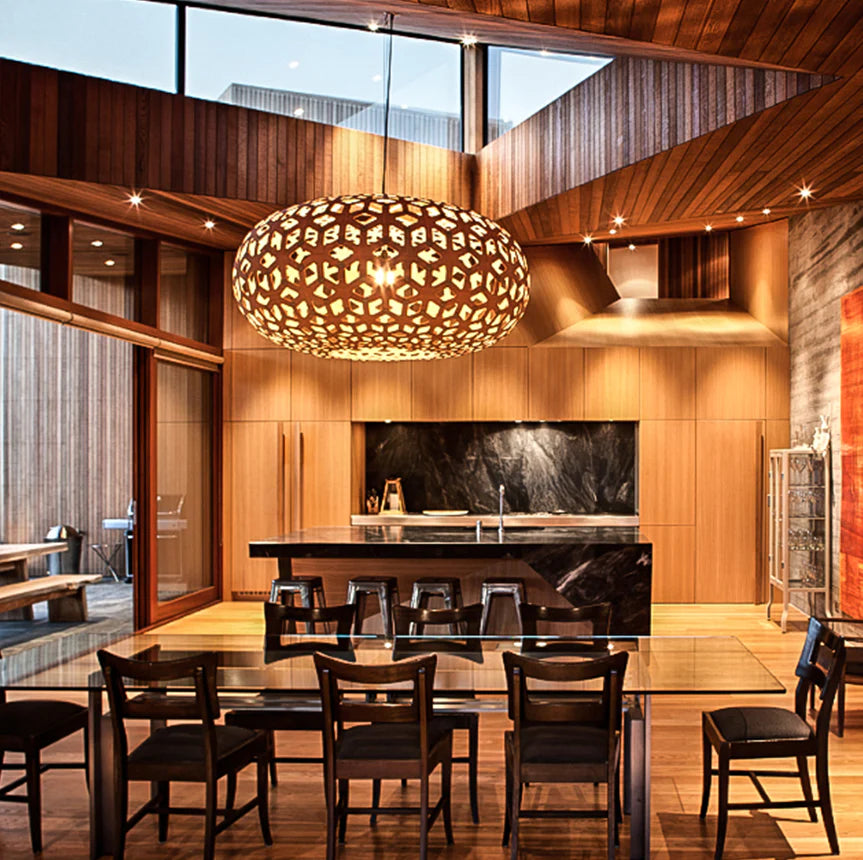
Hang your pendant where it can bring character and a welcoming pool of light to the space. Over a dining table, it helps define the setting; in a living room, it can add a sculptural focal point and a gentle overall glow.
The Coral’s open form is part of its appeal. The light and shade create a distinctive pattern, so the pendant looks beautiful switched on, and still has plenty of personality when it’s off.
2. Add a lamp for the cosy corners
A floor or table lamp brings light down to a more comfortable level and makes a room feel inviting after dark. Place one beside a sofa for reading, near a favourite chair, or on a side table to give the room a soft pool of light when the pendant is dimmed.
If you'd like the same David Trubridge look at lamp height, three of the designs come as table lamps.
The David Trubridge Coral Table Lamp brings the Coral's lively open pattern down to bedside or side-table scale.

The Floral Table Lamp gives a softer, more intricate glow, with its petal-like cut-outs shown here in black, orange and red inside finishes.

And the Koura Table Lamp has a fuller, teardrop form inspired by the sea urchin, shown here in red, lime and black.

Each fits onto your own lamp base (sold separately) and casts lovely shadows on nearby walls: the same bamboo warmth, at a cosy reading-height level.
For an easy-to-live-with mix: pendant over the dining table, a Trubridge table lamp by the sofa, another on a bedside console. Simple, useful, and lovely in the evening!
Psst: the table lamps take the same E27 bulb as the pendants, so everything above applies to them, too: one bulb choice, matching warmth across the whole room!
3. Add task lighting where you need it
Task lighting is focused light for a particular activity: reading, cooking, working or doing a puzzle at the table. A reading lamp beside your chair or suitable under-cabinet lighting in the kitchen can make everyday jobs easier without needing the whole room to be brightly lit.
Try to keep the colour of nearby bulbs reasonably consistent. Warm pendant light paired with a much cooler task light can look a little jarring; choose bulbs that feel comfortable together.
4. Finish with a little accent light
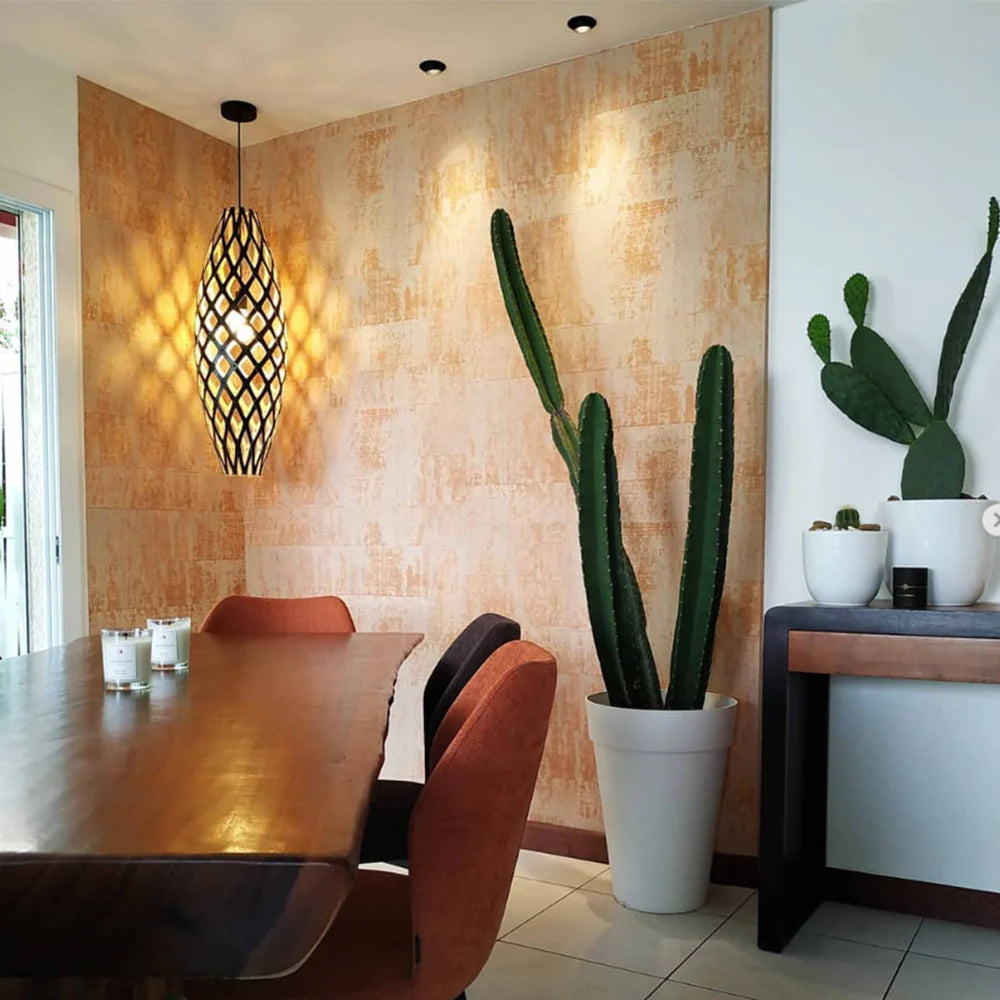
Accent lighting draws your eye to details you love: a piece of art, a shelf of treasured objects, a favourite plant or a beautiful corner. A small lamp or carefully positioned light can add depth and make the room feel considered.
You don’t need to light every object, of course. Just one or two highlights can be enough to make your space feel personal.
An easy room-by-room starting point
- Living room: warm 2700K pendant, dimmable if suitable, floor lamp for reading, small accent lamp for a shelf or side table
- Dining area: warm pendant above the table, dimmer for a softer meal-time mood, nearby lamp for a gentle evening glow
- Bedroom: warm pendant or ceiling light, bedside lamps for reading, subtle accent light if you’d like a little extra softness
- Kitchen: warm ambient light, practical task lighting where you prepare food, pendant above a dining nook if it suits the layout
This is a starting point, not a strict formula. Your room, ceiling height and daily routines all make a difference. Keep the lighting useful first, then adjust the layers until the space feels right to you.
A quick buying checklist
Before you pop a bulb in your basket, check:
- Fitting: E27 for the Coral, Floral and Kina models listed above
- Voltage: select a bulb suitable for New Zealand mains
- Brightness: compare lumens, not watts alone
- Colour: 2700K for a warm glow; 3000K for a slightly cleaner white
- Dimming: both the bulb and dimmer need to be compatible
- Product instructions: confirm the requirements for your exact pendant
When you’re choosing wooden pendant lights, the bulb is a small decision that makes a surprisingly big difference. For a Coral or another compatible David Trubridge pendant, begin with an E27 LED in warm white, then add lamps and accent lighting to suit how you use the room.
That’s the secret to a warm, layered feel: not one bright light doing all the work, but a few thoughtful sources working together. Explore David Trubridge lighting at Design Withdrawals and find a piece that feels at home in your space: your evening glow, sorted! ✨